
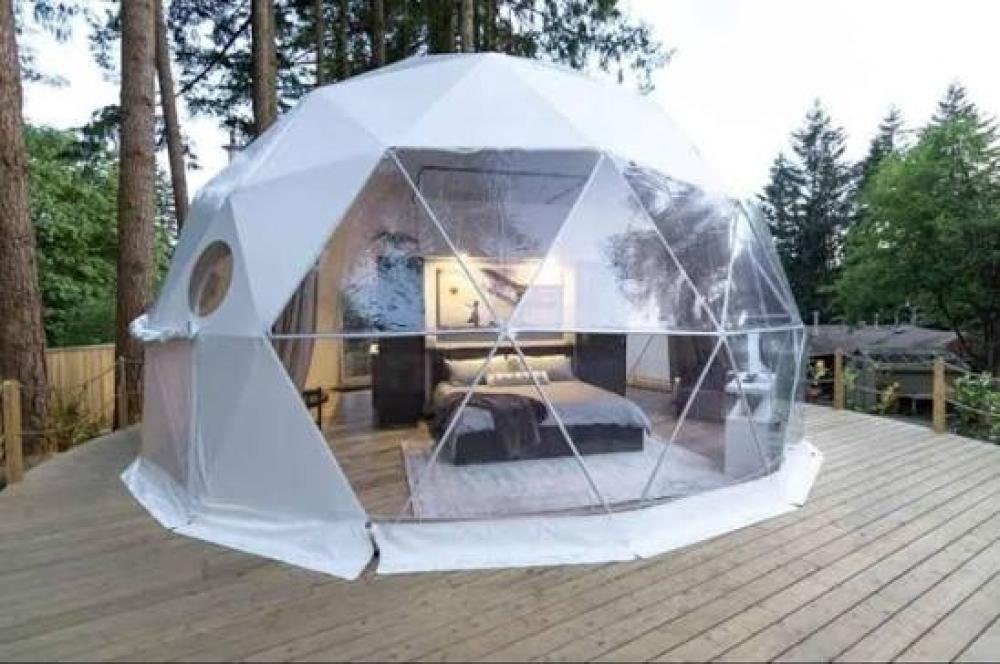
في عالم المعمار والبناء، طالما سعى الإنسان لإيجاد أشكال هندسية توفر أقصى مساحة بأقل قدر من المواد. ومن بين كل الابتكارات الهندسية، تبرز القبب الجيوديسية (Geodesic Domes) كواحدة من أعظم التحف التي تدمج بين الرياضيات البحتة، الاستدامة البيئية، والجمال البصري الفريد.
فكيف ظهرت هذه الهياكل الساحرة؟ ولماذا أصبحت خياراً مفضلاً للمستقبل؟
1. ما هي القبة الجيوديسية؟
القبة الجيوديسية هي هيكل نصف كروي (أو شبه كروي) يتكون من شبكة من المثلثات المتشابكة. كلمة "جيوديسي" مشتقة من اليونانية وتعني "قياس الأرض"، وعادة ما تعتمد في تصميمها على خطوط الجيوديس أقصر المسافات بين نقطتين على سطح منحني.
تم شُهرة هذا التصميم عالمياً في منتصف القرن العشرين بفضل المعماري والمخترع العبقري "بوكمينستر فولر" (Buckminster Fuller)، الذي سعى لتوفير مساكن اقتصادية، خفيفة الوزن، وسريعة البناء لمواجهة أزمات الإسكان العالمية.
2. السر وراء القوة: هندسة المثلثات
تستمد القبة الجيوديسية قوتها الهيكلية المذهلة من المثلث، والذي يُعد الشكل الهندسي الوحيد القابل للصلابة الذاتية دون الحاجة لدعامات إضافية عند الزوايا.
عندما تتعرض القبة لأي ضغط خارجي (مثل الرياح العاتية، الثلوج الكثيفة، أو حتى الزلازل)، يتم توزيع القوة بالتساوي على طول الهيكل بالكامل وليس على نقطة واحدة. هذا التوزيع المتوازن يجعلها من أقوى الهياكل المعروفة في تاريخ الهندسة مقارنة بوزنها الخفيف للغاية.
3. المزايا الفريدة للقبب الجيوديسية
تتمتع هذه الهياكل بالعديد من الخصائص الاستثنائية التي تجعلها متفوقة على المباني التقليدية (المربعة أو المستطيلة):
- كفاءة استثنائية في استخدام المساحة: الكرة هي الشكل الذي يغطي أكبر حجم بأقل مساحة سطح ممكنة؛ مما يعني توفيراً هائلاً في مواد البناء (حوالي 30% إلى 50% أقل مقارنة بالمباني التقليدية).
- مقاومة فائقة للظروف المناخية: بسبب شكلها الانسيابي، تنزلق الرياح القوية والأعاصير من فوقها بسهولة بدلاً من الاصطدام بجدران مسطحة، مما يجعلها آمنة للغاية في المناطق العرضة للكوارث الطبيعية.
- كفاءة الطاقة والتهوية: الهواء داخل القبة يتحرك بحرية ودون زوايا ميتة، مما يُسهل عملية التدفئة والتبريد ويقلل استهلاك الطاقة بشكل ملحوظ.
- المرونة وسرعة الإنشاء: يمكن تجميع الهيكل الأساسي في غضون أيام قليلة باستخدام مكونات قياسية ومسبقة الصنع دون الحاجة لرافعات عملاقة أو أساسات معقدة.
4. استخدامات متنوعة في العصر الحديث
لم تعد القبب الجيوديسية مقتصرة على الخيال العلمي، بل أصبحت حقيقة واقعة تدخل في قطاعات متعددة:
- السياحة البيئية والمنتجعات الفاخرة (Glamping): أصبحت القبب الزجاجية والشفافة خياراً أول للمخيمات السياحية الفاخرة وسط الطبيعة، حيث تتيح للنزلاء الاستمتاع بمراقبة النجوم والمناظر الخلابة مع توفير كافة سبل الراحة الفندقية.
- الدفيئات الزراعية (Greenhouses): توفر بيئة مثالية لنمو النباتات بفضل توزيع ضوء الشمس المتساوي وامتصاص الحرارة بفاعلية.
- المراكز العلمية والقاعات الكبرى: تُستخدم القباب في مراكز الأبحاث، القباب السماوية (Planetariums)، والمخيمات العسكرية أو الإنسانية الطارئة بفضل سرعة نشرها.
In the world of architecture and construction, humans have always sought to find geometric shapes that provide maximum space with the least amount of material. Among all engineering innovations, Geodesic Domes stand out as one of the greatest masterpieces blending pure mathematics, environmental sustainability, and unique visual beauty.
How did these mesmerizing structures emerge? And why have they become a preferred choice for the future?
1. What is a Geodesic Dome?
A geodesic dome is a hemispherical (or semi-spherical) structure composed of a network of interlocking triangles. The word "geodesic" is derived from Greek and means "earth-dividing" or "measuring the earth," and its design typically relies on geodesics—the shortest paths between two points on a curved surface.
This design gained worldwide fame in the mid-20th century thanks to the genius architect and inventor Buckminster Fuller, who sought to provide economical, lightweight, and fast-to-build housing to address global housing crises.
2. The Secret Behind the Strength: The Geometry of Triangles
The geodesic dome derives its incredible structural strength from the triangle, which is the only geometric shape capable of intrinsic rigidity without the need for additional corner supports.
When the dome is subjected to any external pressure (such as high winds, heavy snow, or even earthquakes), the force is evenly distributed across the entire structure rather than concentrated on a single point. This balanced distribution makes it one of the strongest structures known in engineering history relative to its extremely light weight.
3. Unique Advantages of Geodesic Domes
These structures possess numerous exceptional characteristics that make them superior to traditional (square or rectangular) buildings:
- Exceptional Space Efficiency: A sphere is the shape that encloses the largest volume with the smallest possible surface area, translating to massive savings in building materials (about 30% to 50% less compared to traditional buildings).
- Superior Weather Resistance: Due to its aerodynamic shape, strong winds and hurricanes easily glide over it rather than crashing into flat walls, making it extremely safe in disaster-prone areas.
- Energy Efficiency and Ventilation: Air inside the dome moves freely and without dead corners, facilitating heating and cooling processes and significantly reducing energy consumption.
- Flexibility and Speed of Construction: The basic framework can be assembled within a few days using standardized, prefabricated components without the need for giant cranes or complex foundations.
4. Diverse Uses in the Modern Era
Geodesic domes are no longer confined to science fiction; they have become a reality integrated into multiple sectors:
- Eco-Tourism and Luxury Resorts (Glamping): Glass and transparent domes have become a top choice for luxury nature camps, allowing guests to enjoy stargazing and breathtaking views while providing all hotel comforts.
- Greenhouses: They provide an ideal environment for plant growth thanks to the even distribution of sunlight and effective heat absorption.
- Scientific Centers and Large Halls: Domes are used in research centers, planetariums,